Posts

Showing posts with the label Personal finance

How to save for your kids’ college education
Image
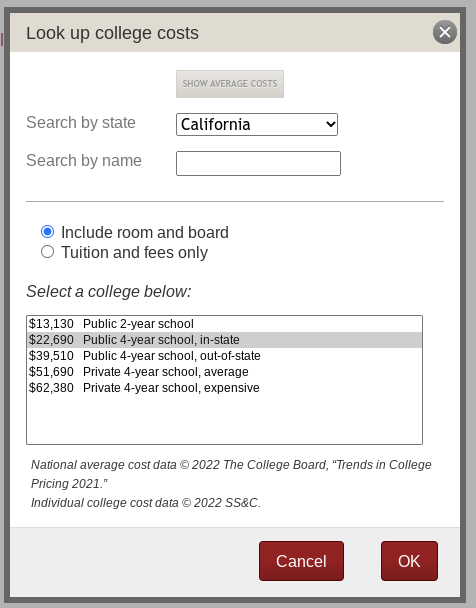
College education is getting more and more expensive. How can you save enough money for children’s college education? There are many ways to do that. In this article, we will talk about one way to do it: using a 529 plan. Summary How much will college cost when you kids go to college What is the 529 plan? Benefits of the 529 plan The contribution limit How to use 529 to fund for your kids’ college Other ways to afford college How much will college cost when you kids go to college For every saving plan, we should have an end goal. So the first thing we will do is to figure out how much the college is going to cost by the time your kids are going there. Vanguard provides this free College cost projector . You can enter the following info, then calculate the projected college cost: Years until college Years in college Rate of annual cost increase Current annual college cost For the current annual cost, by clicking the “look up cost” button, you can then enter the state, then either choose...

How I invest in real estate without actually purchasing properties

Image
I wish someone had told me earlier about this:  You can invest in real estate without purchasing properties! You can do so through REITs, crowdfunding or investing in real estate focused businesses. I have been investing in REITs for a while now. In this article, I will talk about what are REITs, the benefits of REITs, the performance of REITs, its correlation to stocks, how to invest in REITs and tax considerations. Summary What are REITs The benefits of REITs The performance of REITs Dividend yield Fund performance Correlation of REITs and stock How to invest in REITs Tax considerations What are REITs REITs stands for real estate investment trusts. They are companies who own and manage real estate. There are REITs in a lot of different property sectors, like industrial, retail, residential, mortgage, etc. The benefits of REITs The major benefit of REITs is dividend income.  REIT must distribute at least 90% of its taxable income as dividends to its stockholders. So you as an...

How to use HSA to fund your retirement

Image
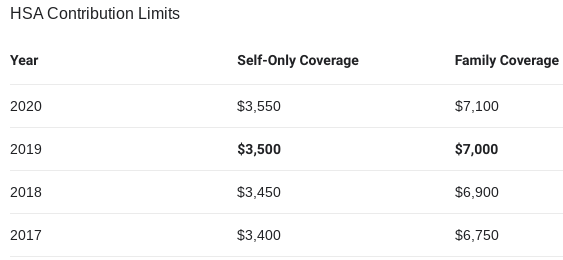
In this post, we will talk about what HSA is, the benefits of using HSA and how you can use it to fund your retirement. Summary What is HSA? The benefits of using HSA How to use HSA to fund your retirement Other options What is HSA? HSA is a health saving account. You can use it for medical expenses with some high deductible health plans in the US. You can also use HSA for non-medical expenses before age 65, however, you will need to pay a 20% penalty plu tax if you do so. However, after age 65, you will be able to use money in your HSA account for non-medical expenses without any penalty. The benefits of using HSA The main benefits of HSA is due to its tax treatment. HSA is: Pre-tax when you are contribution to it, meaning that you are not paying tax for the money you contributed to it; Growth is tax free, meaning that you don’t need to pay tax for the growth of the funds; Tax-free when you withdraw it. How to use HSA to fund your retirement HSA is a great way for you to lower income ...

How to rebalance your portfolio

In this article, we will talk about why you need to rebalance your portfolio, how often you should do it and how to rebalance your portfolio for accounts that you are regularly investing in vs. accounts that you are no longer investing in. Summary Why you should rebalance your portfolio How often should you rebalance your portfolio? How to rebalance your portfolio For accounts that you are no longer investing in For accounts that you are regularly investing in Why you should rebalance your portfolio Because different assets change in value over time, your portfolio can drift out of your intended allocation. By rebalancing assets, you are trading value out of strong-performing assets into weaker assets, which is a form of “buy low, sell high” that boosts long-term results. How often should you rebalance your portfolio? You can balance your portfolio when the percentage of a certain fund has shifted more than a certain percentage or at a certain time frequency. For example, you can rebal...

Use DRIP for compound interest

In this article, we will talk about what DRIP is, the advantages of using DRIP, tax considerations and how to set up DRIP for your Fidelity investment. Summary What is DRIP? The advantages of DRIP Tax considerations How to set up DRIP for your Fidelity investment What is DRIP? For a lot of stocks and funds, they pay dividends monthly, quarterly, semi-annually or annually. When you receive the dividends, you have the option to pocket the cash, or use the dividends to buy more stocks.  DRIP stands for dividend reinvestment plan. With DRIP, instead of getting the dividends payout in cash, you will automatically reinvest the dividends into the same companies or mutual funds that issued them. Since each DRIP program is supported by a particular brokerage, the specific details of the program (such as e.g. what securities are eligible for DRIP) will vary. This article presents a general overview of DRIP. For your brokerage’s program, you will need to consult with their documentation. The ...

Is target date fund right for you?

Image
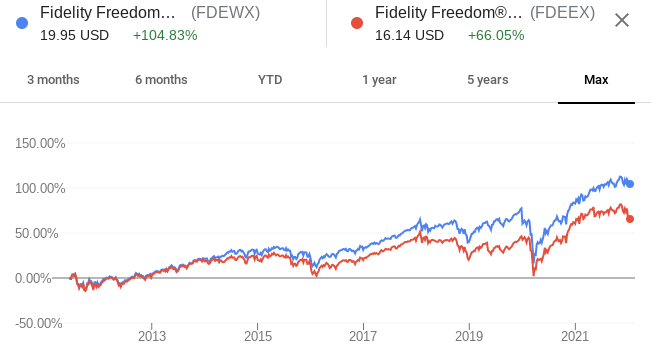
Do you know what is the most common 401(k) default investment?  It is a target date fund.  In this post, we will talk about what they are, their pros and cons, how to pick the right one for you, and some final thoughts. Summary What is a target date fund? Pros and cons Pick the right one Final thoughts What is a target date fund? Target date fund is a combination of US stocks index fund, non-US stocks index fund, US bond fund and non-US bond fund. It is basically a fund of funds.  The name “target date”, means the fund itself is targeting a specific year of retirement. For example, if you plan on retiring in 2030, you can buy the 2030 target date fund. As the time goes nearer and nearer to the target date, the fund will gradually increase its percentage of bond funds and decrease its percentage of stock funds, in order to increase safety. The idea is that most people will be comfortable investing a lot of money into risky stocks when they are young and working, but as ret...